TubeOnAI Summer Sale — Get 70% OffGrab Deal Now
TubeOnAI vs. Recall

TubeOnAI vs. Recall: A Comprehensive Comparison of Two Powerful AI Content Tools

In today's fast-paced digital environment, content creators, students, and professionals alike seek efficient tools to manage and digest vast amounts of information. Two noteworthy contenders in this space are TubeOnAI and Recall. Both offer unique features designed to summarize and repurpose content, yet they cater to distinct user needs and preferences. In this article, we compare TubeOnAI and Recall, outlining their key features, user accessibility, productivity enhancements, and overall effectiveness, helping you decide which tool best suits your requirements.

Available on
  • Web
  • iOS
  • Android
  • Chrome

Key Feature Comparison

To better illustrate the differences between these platforms, here's a comparison of their core features across summarization, repurposing, accessibility, interactivity, and productivity.

Content Summarization

Content Summarization

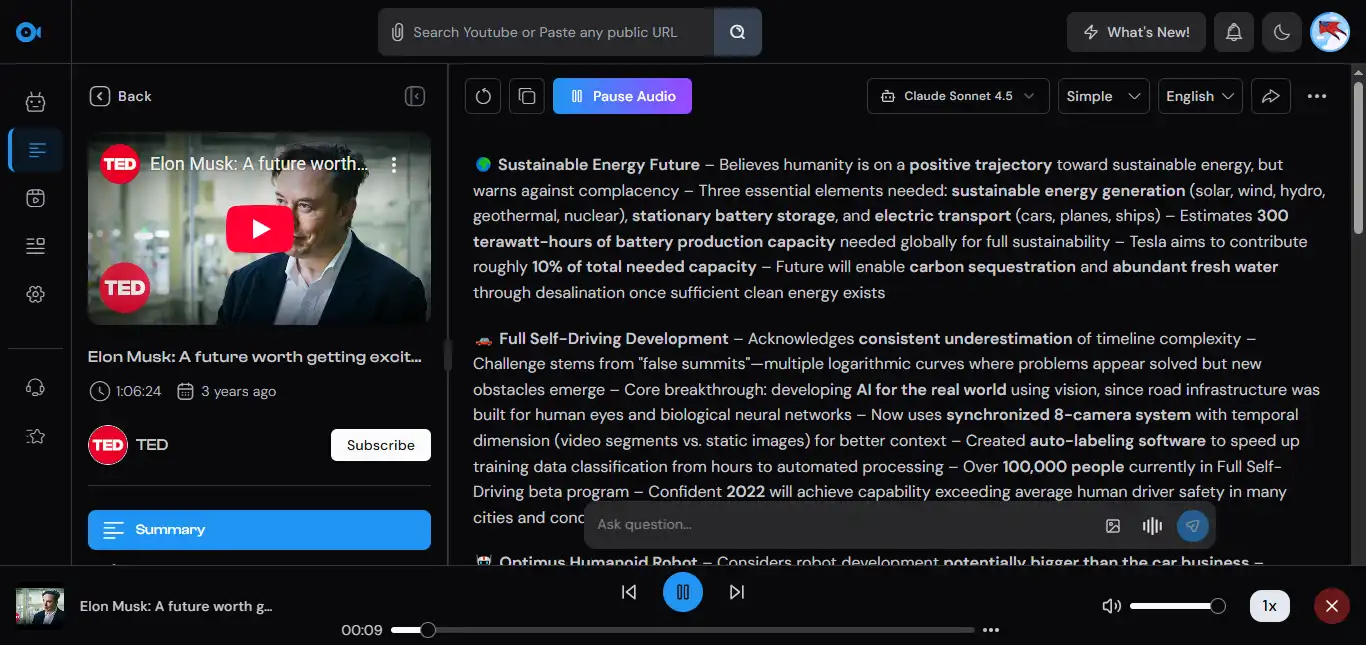
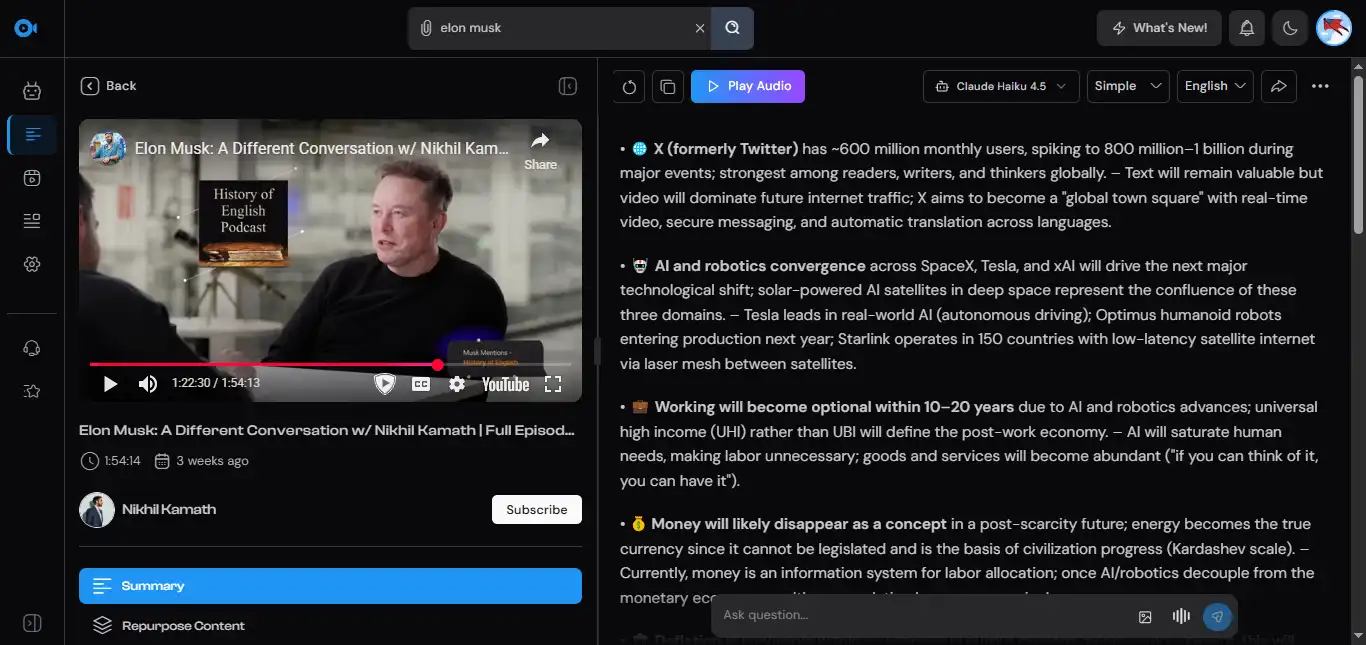
TubeOnAI provides concise summaries from multiple sources, including YouTube videos, podcasts, and various web content formats. Its capability to summarize public URLs, articles, PDFs, and Google Drive files gives users a versatile tool for content management. Recall offers similar summarization capabilities, but focuses more on organizing summarized content into a structured knowledge base for easy retrieval and rediscovery.
Content Repurposing

Content Repurposing

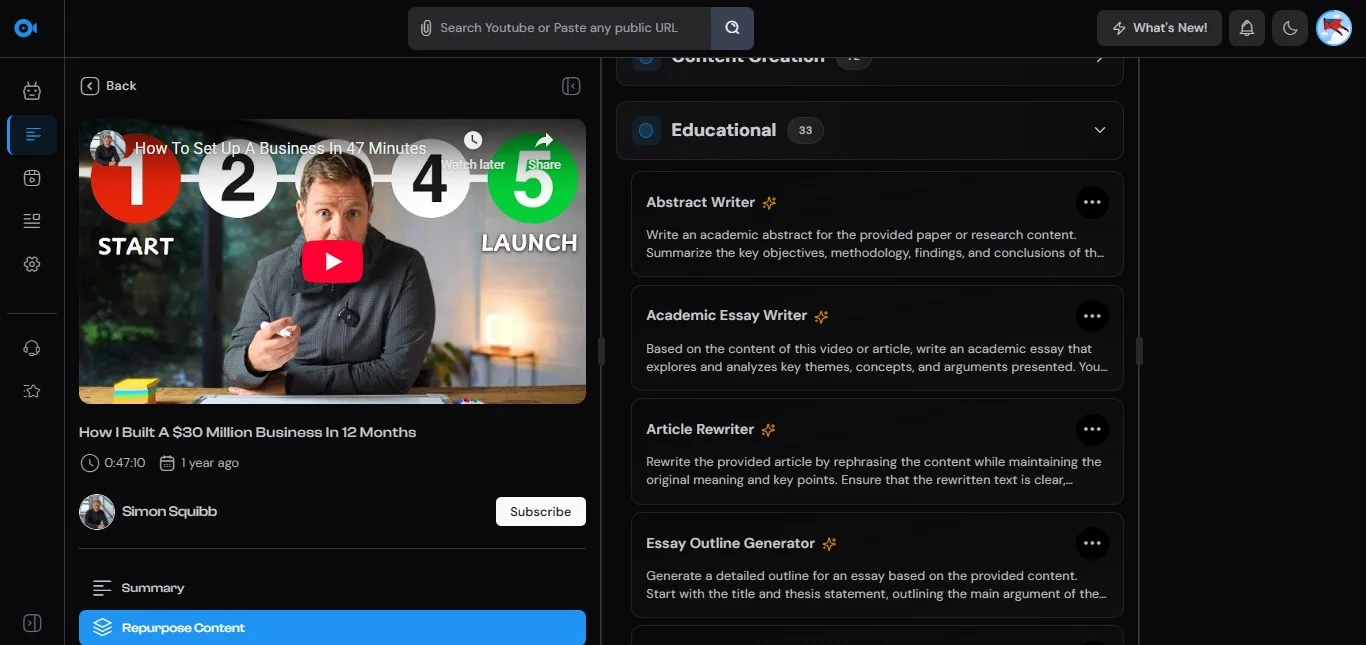
One of the standout features of TubeOnAI is its ability to repurpose content. With over 100 customizable templates, it enables users to convert YouTube videos into blog posts, generate engaging Twitter threads, or create YouTube scripts. In comparison, Recall primarily focuses on summary generation and organization without offering structured templates for repurposing content.

User Accessibility

User Accessibility

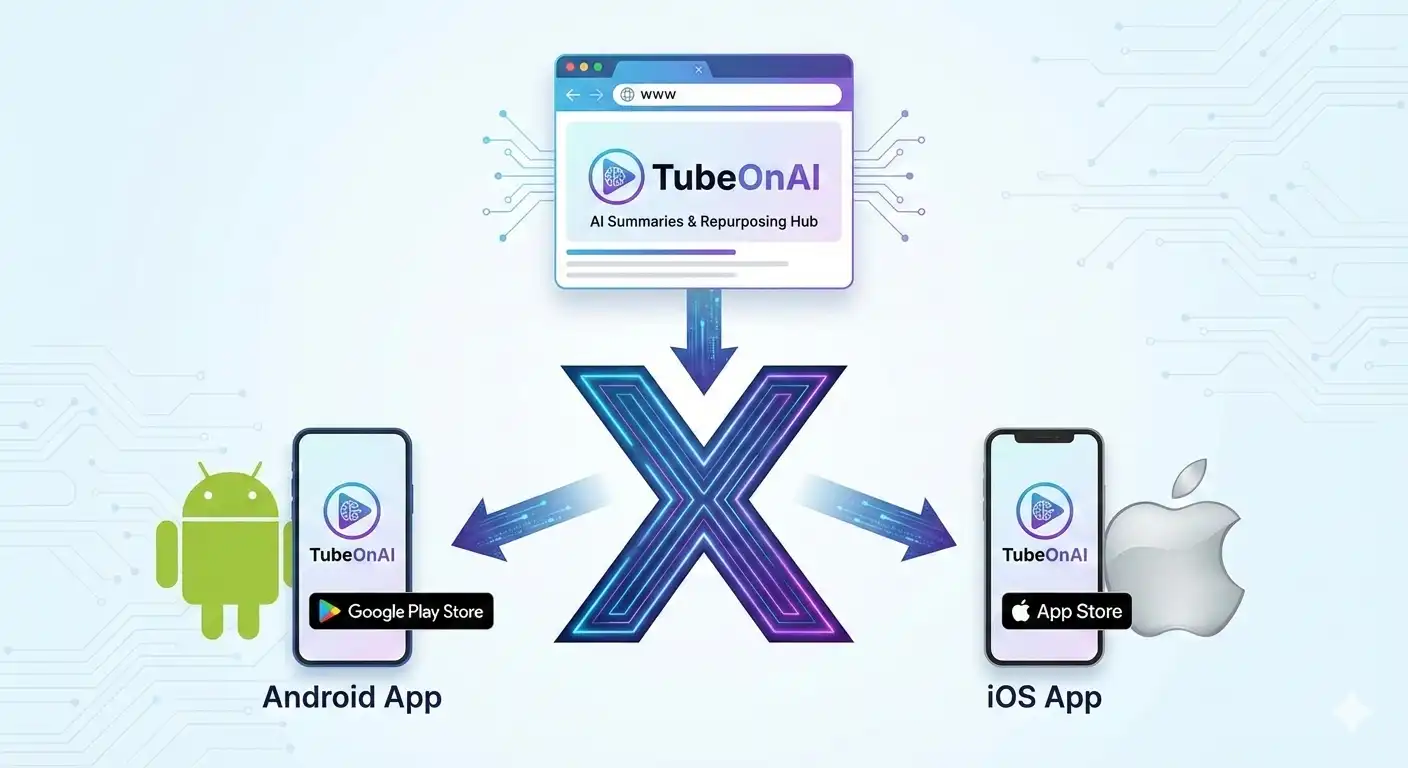
Both platforms prioritize accessibility. TubeOnAI boasts multi-platform integration with a web app, Chrome extension, and mobile applications for both Android and iOS, making it easy to summarize and repurpose content on the go. Recall also provides a web experience and mobile apps, but emphasizes offline functionality, allowing users to access stored data without an internet connection.

Interactive Learning and Connectivity

Interactive Learning and Connectivity

TubeOnAI enhances user engagement through interactive features, including the ability to listen to summaries in over 23 languages, auto-summaries for followed creators, and the option to ask follow-up questions for further clarification. Recall lacks similar interactive capabilities, focusing instead on summarizing and categorizing information.

Productivity Enhancements

When it comes to productivity, TubeOnAI claims to save users a significant amount of time weekly, enhancing content creation speed by ten times. This quantifiable benefit appeals to both busy professionals and students. Recall enhances productivity, but does not provide explicit metrics to quantify its benefits, which may make it less appealing to data-driven users.

TubeOnAI vs. Recall at a Glance

TubeOnAI
Recall
Content summarization (videos, podcasts, articles, PDFs, Google Drive)
yes
Summaries organized into a knowledge base
Content repurposing templates
100+ templates
no
Web app
yes
yes
Chrome extension
yes
no
Mobile apps (Android & iOS)
yes
yes
Offline access to stored data
no
yes
Listen to summaries (23+ languages)
yes
no
Auto-summaries for followed creators
yes
no
Ask follow-up questions
yes
no
Quantified productivity gains
10x faster content creation
no
Knowledge base for rediscovery
no
yes

Summarize and repurpose content for free with TubeOnAI

Get Started Free